 The french fur trappers who came through the Great Lakes region called this delightful little subshrub Petit the de bois meaning "little tea of the woods." It's the plant we know as Wintergreen or Teaberry, Gaultheria procumbens, and it has an enjoyable wintergreen flavor and aroma. Find a forest with sandy, acid soil and this tiny shrub is a possibility. It's one of several native plants that stay green all winter and add color to the winter landscape.
Showing posts with label Gaultheria. Show all posts
Showing posts with label Gaultheria. Show all posts
Tuesday, December 27, 2011
Green in Winter: Little Tea of the Woods
The french fur trappers who came through the Great Lakes region called this delightful little subshrub Petit the de bois meaning "little tea of the woods." It's the plant we know as Wintergreen or Teaberry, Gaultheria procumbens, and it has an enjoyable wintergreen flavor and aroma. Find a forest with sandy, acid soil and this tiny shrub is a possibility. It's one of several native plants that stay green all winter and add color to the winter landscape.

Wednesday, July 22, 2009
Random Plants From The Indiana Dunes
Harebell is occasional in those few Black Oak savanna remnants that still have a little sunlight getting in, and abundant on thinly wooded foredunes near Lake Michigan. Its thin stems allow it to dance on the breeze - rather delightful until you attempt to get a photo. Cauline leaves are linear - the species name refers to basal leaves that are somewhat round in outline, though in my view they tend to be reniform.
Campanula rotundifolia (Harebell)

The French fur trappers called this little subshrub "Petit The Des Bois," meaning "Little Tea of the Woods."
Gaultheria procumbens (Wintergreen, Teaberry)

Asclepias incarnata (Swamp Milkweed) and Honey Bee

Asclepias tuberosa (Butterfly Milkweed) and Honey Bee

Saturday, January 3, 2009


Winter Greens
A surprising number of native plants are green in winter. It would be interesting and fun to list them sometime, and maybe even do a slideshow. Here are a few I’ve seen recently:
Gaultheria procumbens, Teaberry, Wintergreen. This plant was called “Petit the des bois” (little tea of the woods) by the French fur trappers inNorth America . Amazingly, it’s a shrub - albeit vertically challenged! Sometimes regarded as a "subshrub."
Gaultheria procumbens, Teaberry, Wintergreen. This plant was called “Petit the des bois” (little tea of the woods) by the French fur trappers in

Tipularia discolor, Crane Fly Orchid. This plant produces a single leaf in autumn and takes advantage of ample sunlight reaching the forest floor in winter. When it flowers in summer it is scapose, that is, having a “scape” (leafless flowering stem) and the scape is without chlorophyll. It is named for Tipula, a genus of Crane Fly that the flowers resemble. Some Orchids are thought to mimic the look of insects so well as to mislead the insects to attempt copulation, thereby transferring pollen. Orchid mimicry is amazing, and well worth a little browsing time on the Internet. I don’t know whether anyone has actually seen Crane Flies on this plant, but it would be fun to watch a flowering colony during the night and document what shows up. And who says freckles can't be attractive? Just look at Yasmine Bleeth!

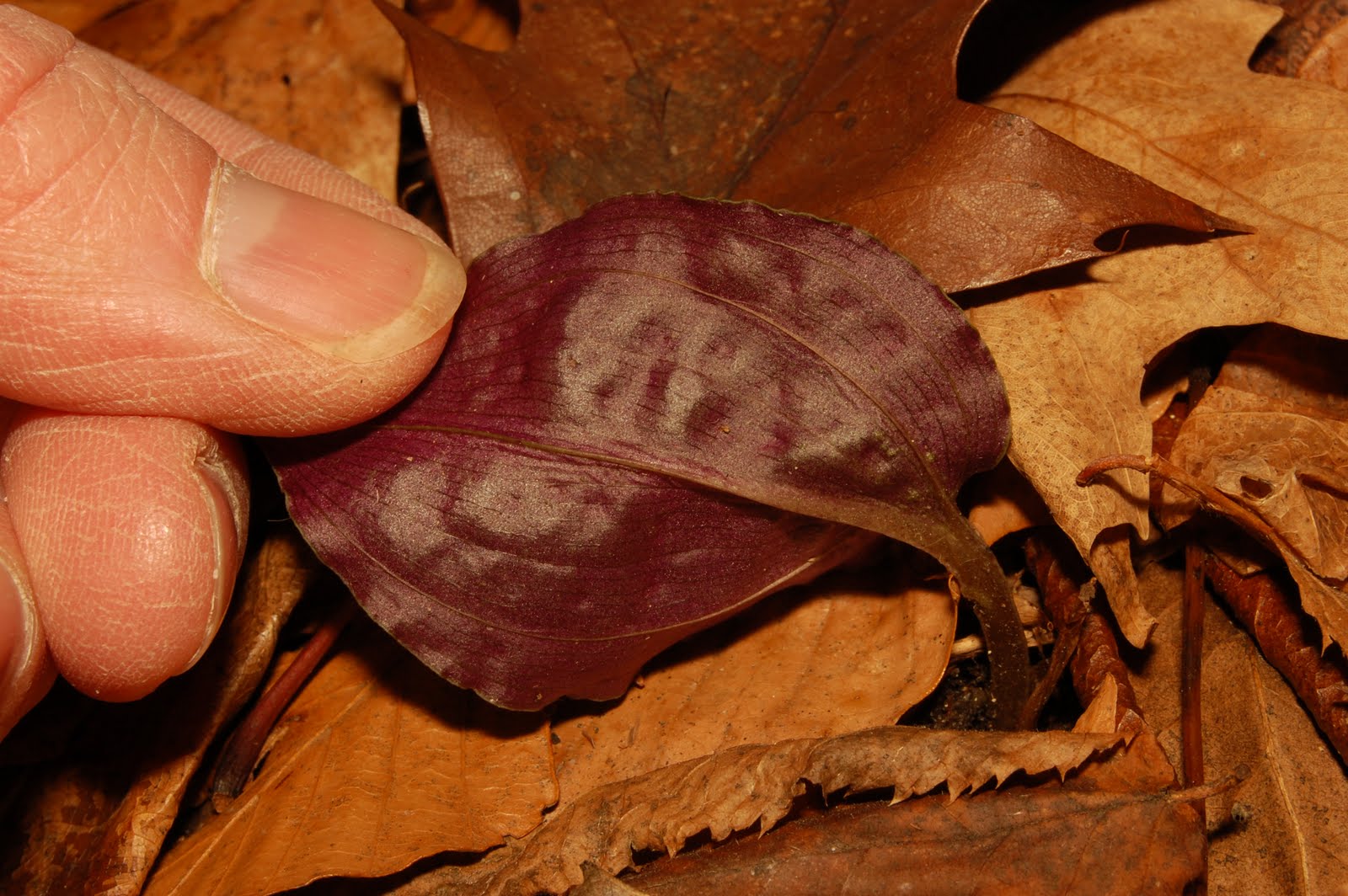
Aplectrum hyemale, Puttyroot or Adam-and-Eve Orchid. This is another Orchid that produces a winter leaf (hyemale = of winter), but the flowering scape on this one sometimes has a little greenish cast to it. The leaf has a very strange texture, sort of crinkly like cellophane, and the veins are extremely tough, like reinforced shipping tape. One sometimes finds a leaf that’s been chewed a little and then left alone. Perhaps they are too tough to bother with or they taste bad. Both of these Orchids are common south of the Chicago Region but rare as hen's teeth around here.

Finally, a frozen pool at Ambler Flatwoods, just for fun.

Thursday, July 10, 2008
Ericaceae

Teaberry, or Wintergreen, which was flowering at Sebert Woods in
LaPorte County, Indiana. The French fur traders called it "Petit The
Des Bois," meaning "Little Tea of the Woods." Nice name!
Keith
Subscribe to:
Posts (Atom)