The magnificent rock cliffs and canyons of central Indiana support a nice variety of pteridophytes. Walking Fern, shown below, grows on damp rock walls and fallen boulders, especially where it's mossy. It's called "walking fern" because sometimes it gets up and moves around to find a more suitable place to grow! OK, that's not true, but it does have a pretty cool trick. The long-attenuate blades take root at the tip and new plants sprout - an excellent form of vegetative reproduction. Sometimes the tips are not touching the substrate, but little plantlets grow and eventually fall off, spreading the fern to new locations.
Camptosorus rhizophyllus, or Asplenium rhizophyllum, Walking Fern

A rare hybrid of Walking Fern and Ebony Spleenwort is called Pinnatifid Spleenwort, Asplenium pinnatifidum. It sometimes shows up on a damp rock shelf beneath an overhanging outcrop.
Asplenium pinnatifidum, Pinnatifid Spleenwort

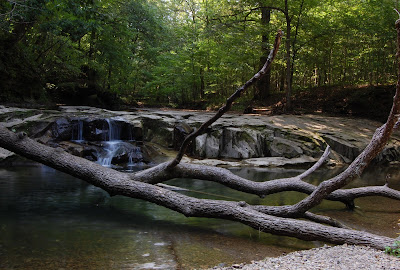
Any trip to central or southern Indiana should include waterfall photos. They're tough to find right now, however, as many are almost completely dried up